Affiliate-Driven Reward Systems Connecting Poker Tournaments and Live Roulette Broadcasts Across Platforms
Written by Henrik Bauer · Aug 2, 2026

Affiliate-Driven Reward Systems Connecting Poker Tournaments and Live Roulette Broadcasts Across Platforms
Understanding the Interconnected Gaming Landscape
Cross-platform reward webs operate through structured affiliate programs that tie poker tournament participation to live roulette streaming activities, creating pathways where players accumulate points or bonuses across separate platforms while those partnerships handle tracking and payouts, and observers note that such systems rely on shared user identifiers combined with real-time data feeds to maintain continuity between events. Data from industry reports shows these networks expanded notably in the mid-2020s as operators sought methods to retain engagement across multiple game formats without requiring users to manage separate accounts for each type of activity.
Researchers at various academic institutions have documented how affiliate ties function as intermediaries that receive commissions based on referred traffic and subsequent player activity, yet the same frameworks allow rewards earned during poker tournaments to convert into credits usable on roulette streams through automated conversion tables that adjust for game volatility and session length. In August 2026 several major platforms reported increased integration volumes during summer tournament seasons, with figures revealing that cross-format redemptions accounted for measurable portions of total bonus distributions according to aggregated operator disclosures.
Mechanics of Poker Tournament Integration
Poker tournaments generate entry points for these webs when participants register through affiliate-linked portals that embed tracking pixels and unique codes, allowing the system to log performance metrics such as finish position, total hands played, and prize amounts won while simultaneously flagging eligibility for downstream rewards. Those who study affiliate ecosystems explain that the data flows into centralized ledgers maintained by the affiliate network, which then applies predefined multipliers to translate tournament results into roulette stream credits or exclusive access tokens for live dealer sessions.
Operators coordinate with affiliate partners to set payout schedules that release portions of earned rewards immediately after tournament completion and hold remaining balances until players engage with linked roulette streams, a structure that encourages continued activity across formats. Evidence from regulatory filings in multiple jurisdictions indicates that such delayed-release mechanisms help maintain compliance with responsible gaming standards by spacing out bonus availability rather than delivering all incentives at once.
Live Roulette Streams as Reward Destinations
Live roulette streams receive traffic from these webs when players redeem converted points for features like enhanced betting limits, private table invitations, or multiplier bonuses that apply during specific broadcast windows, and the streams themselves often display real-time leaderboards that incorporate data from connected poker events to highlight top cross-platform performers. Industry analyses reveal that roulette operators benefit from the steady influx of users who arrive already pre-qualified through poker tournament histories, reducing acquisition costs compared with standalone marketing campaigns.
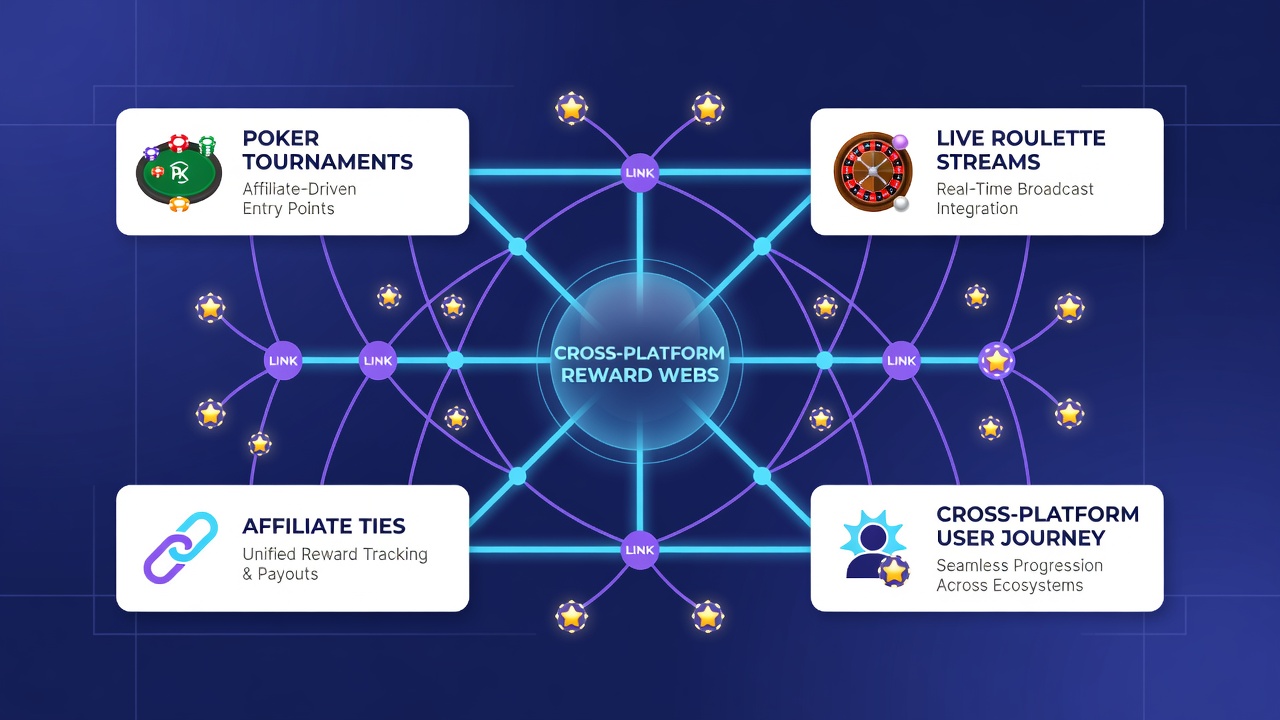
Streaming platforms embed affiliate pixels that record when users from poker-linked accounts place bets or extend viewing sessions, feeding that information back into the shared reward ledger so that ongoing engagement generates additional points usable in future tournaments. Reports compiled by the European Gaming and Betting Association highlight that these bidirectional data exchanges have grown more sophisticated since 2024, incorporating machine learning models to predict which reward structures yield the highest retention rates across both game types.
Regulatory and Technical Considerations
Regulatory bodies in regions such as Nevada and parts of Australia require transparent reporting of how affiliate commissions intersect with player reward flows, mandating that operators disclose the percentage of revenue allocated to cross-platform incentives versus direct affiliate payments. Technical standards developed by organizations like the Interactive Gaming Council specify data security protocols that protect user identifiers as they move between poker tournament servers and roulette stream endpoints, ensuring encryption standards prevent unauthorized access during transfers.
Studies conducted at institutions including the University of Nevada, Reno have examined the prevalence of these integrated systems, finding that networks employing unified reward ledgers demonstrate measurable differences in player lifetime value metrics compared with isolated platform operations. Those figures appear in publicly available research summaries that detail variance across different regulatory environments without attributing causation to any single factor.
Future Developments in Cross-Platform Networks
Projections from trade publications suggest continued refinement of these webs through expanded use of blockchain-based ledgers that record reward transactions immutably across participating operators, reducing disputes over point conversions while maintaining audit trails for regulatory review. In August 2026 developers announced pilot programs testing interoperability standards that would allow smaller affiliate networks to connect with major poker and roulette platforms without custom integration work on each side.
Observers note that geographic variations in implementation remain significant, with certain markets favoring stricter separation between affiliate marketing activities and direct player rewards while others permit tighter coupling provided disclosure requirements are met. Data compiled across multiple jurisdictions continues to inform best practices shared through industry conferences and technical working groups.
Conclusion
The architecture of affiliate-driven reward systems that link poker tournaments to live roulette streams continues to evolve through iterative technical improvements and regulatory adjustments across different regions. Comprehensive tracking mechanisms combined with conversion protocols enable seamless movement of value between formats, supported by data standards that facilitate compliance and operational efficiency. As platforms refine these connections, industry reports and academic examinations provide ongoing documentation of how such webs influence player behavior patterns and revenue distribution models without implying any preferred approach or outcome.