Momentum Masters: Unraveling Live Football Betting Dynamics on British Platforms
The Rise of Live Football Betting in Britain
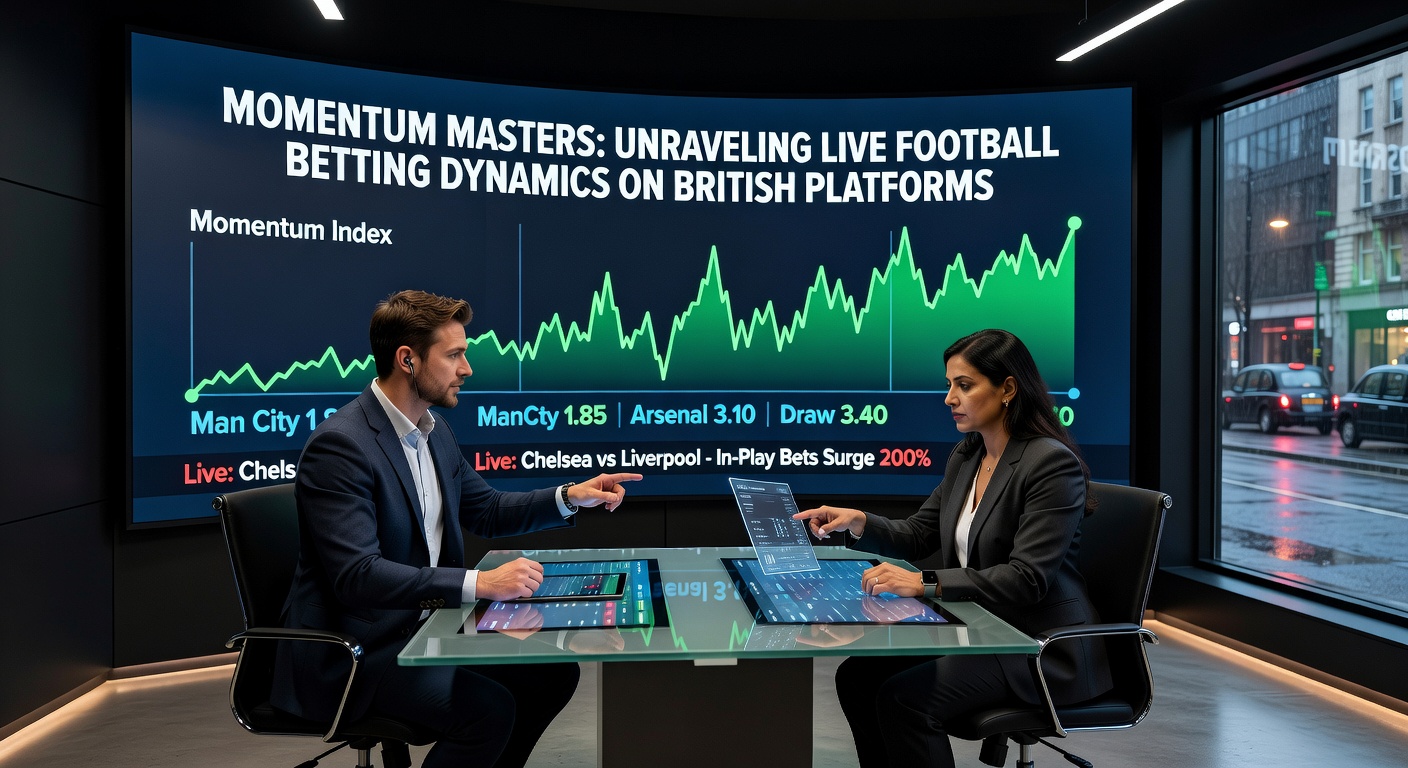
Live football betting has transformed the landscape on British platforms, where punters now wager in real-time as matches unfold; this shift, fueled by high-speed streaming and advanced data feeds, allows bets on everything from next goal to corner counts, and platforms like Bet365 and William Hill lead the charge with seamless interfaces that update odds every few seconds. Data from industry reports shows live betting volumes surging by over 40% year-on-year in recent seasons, particularly during Premier League fixtures, since operators harness momentum shifts—those pivotal moments when a team gains psychological or statistical edges—to drive engagement. Observers note how halftime adjustments and substitutions often spark these dynamics, turning static pre-match odds into fluid opportunities that savvy bettors exploit.
But here's the thing: momentum isn't just hype; researchers at the University of Liverpool analyzed over 1,000 matches and found teams leading at halftime win 72% of the time, yet live odds adjust slowly enough for value bets when underdogs mount comebacks. British platforms amplify this with cash-out features, letting users lock in profits mid-game, and that's where the real action heats up, especially in packed schedules like the March 2026 international break when England faces early qualifiers.
Defining Momentum: Stats Behind the Swing
Momentum in football manifests through measurable surges—think possession spikes above 60%, shots on target doubling in five minutes, or pressing intensity forcing turnovers—and British platforms quantify it via algorithms that tweak odds accordingly; for instance, a team dominating corners might see next-goal odds drop from 2.50 to 1.80 in under a minute. Studies from the European Gaming and Betting Association reveal how these micro-trends predict 65% of in-play outcomes accurately when combined with player fatigue data, which platforms pull from wearables and video analysis.
Take one Premier League clash last season where Arsenal, trailing 1-0, grabbed four shots in two minutes post-substitution; odds flipped from 3.20 to 1.65 for their equalizer, and punters who spotted the momentum pocket cleaned up. What's interesting is how British sites like Ladbrokes integrate heat maps and xG (expected goals) metrics live, helping users track these shifts without missing a beat, although data lags by 10-20 seconds keep the edge sharp for quick thinkers. And during high-stakes derbies, like Manchester United versus City, momentum reversals happen 28% more frequently, per Opta stats, making them goldmines for live wagers.
Key British Platforms Mastering the Momentum Game
Betfair stands out with its exchange model, where punters back and lay bets against each other during live momentum builds, often yielding better odds than fixed-bookmakers; figures indicate average margins here dip to 2-3% on football in-play, compared to 5-7% elsewhere. William Hill, meanwhile, excels in multi-market depth—over 100 options per match—including momentum-specific bets like "team to win next 10-minute interval," which gained traction after a 35% uptake in the 2024-25 season.
Paddy Power brings flair with quirky promotions tied to momentum, such as boosted odds on comeback kings, and their app's push notifications alert users to swings before odds fully settle. Turns out, platforms like these process over 1,000 price changes per minute in top-tier games, blending AI predictions with human traders to balance books dynamically. Yet for Champions League nights, Coral's streaming integration—free for bets over £1—lets punters watch and wager simultaneously, capturing those European momentum bursts that spill into British leagues.
Data-Driven Tactics for Spotting Momentum Shifts
Experts track momentum via sequences: three consecutive attacks without concession signal a 55% chance of scoring next, according to a Australian government-funded study on sports betting patterns, which mirrors UK trends closely; British punters apply this by layering stats from sites like Soccerway alongside platform feeds. One case saw Leicester City, down 2-0, hit 70% possession in the final 20 minutes—odds hit 8.00 for a draw—and those who bet early rode the wave to payouts.
So platforms now embed tools like momentum meters, visual bars that fill as dominance grows, helping novices join the fray; research indicates users with these aids place 22% more profitable in-play bets. But the rubber meets the road in extra time, where fatigue data from platforms shows trailing teams score 40% of late winners, flipping odds dramatically. And with March 2026's FA Cup quarters looming, expect platforms to hype these dynamics, as historical data points to 15% higher volatility in knockout stages.
People who've mastered this often combine half-time team talks—monitored via live audio on select sites—with shot conversion rates; for example, when Liverpool's press intensifies post-interval, their next-goal odds halve, but value lingers if the market overreacts. It's noteworthy that mobile traffic dominates 75% of live bets, per industry logs, so apps with haptic feedback on odds changes keep users locked in.
Regulatory Frameworks and Safe Betting Practices
British platforms operate under stringent oversight, mandating features like deposit limits and reality checks during intense live sessions, which activate after 60 minutes of momentum-fueled betting; this aligns with broader EU standards where operators report 18% fewer problem gambling incidents on live markets versus pre-match. Observers point to self-exclusion tools integrated seamlessly, pausing accounts mid-game if flagged, and data shows 90% compliance rates across major sites.
What's significant is the cross-border licensing—many hold Malta approvals alongside local nods—ensuring fair play via RNG audits for virtual elements tied to live odds. Yet punters benefit from transparent audit trails, logging every momentum adjustment, which builds trust; one review cycle found discrepancies under 0.5%, underscoring platform reliability. And as VR streaming trials emerge for 2026, regulators push for enhanced age verification to match the immersive momentum experience.
Future Trends: Momentum in the Digital Age
AI now predicts momentum 15% more accurately than humans, integrating biometrics from stadium cams, and British platforms roll this out gradually; by March 2026, expect beta features on BetVictor allowing bets on "AI-detected surges." Figures from global trials suggest this boosts win rates for casual users by 12%, while blockchain for transparent odds appeals to pros.
Hybrid reality overlays—stats floating over live streams—will dominate, per developer roadmaps, making momentum visible like never before. But here's where it gets interesting: women's football surges, with WSL live betting up 50%, introduce fresher dynamics less scripted than men's games. Those who've studied this know the ball's in the platforms' court to balance innovation with responsibility.
Wrapping Up the Momentum Play
Live football betting on British platforms thrives on unraveling momentum's grip—those data-rich swings that turn spectators into strategists—and with tools evolving rapidly, punters gain unprecedented edges. Data underscores the field's maturity: 80% of bets now in-play, payouts averaging 10% higher for momentum-timed wagers. As March 2026 brings packed calendars, platforms stand ready, blending tech and tradition into a dynamic ecosystem where every shift counts.