Omaha Poker Breakdown: Unpacking Differences from Texas Hold'em and Spotlighting Top UK Poker Sites
Written by Logan Reed · Apr 3, 2026
Omaha Poker Breakdown: Unpacking Differences from Texas Hold'em and Spotlighting Top UK Poker Sites
Texas Hold'em Fundamentals: The Game Everyone Knows
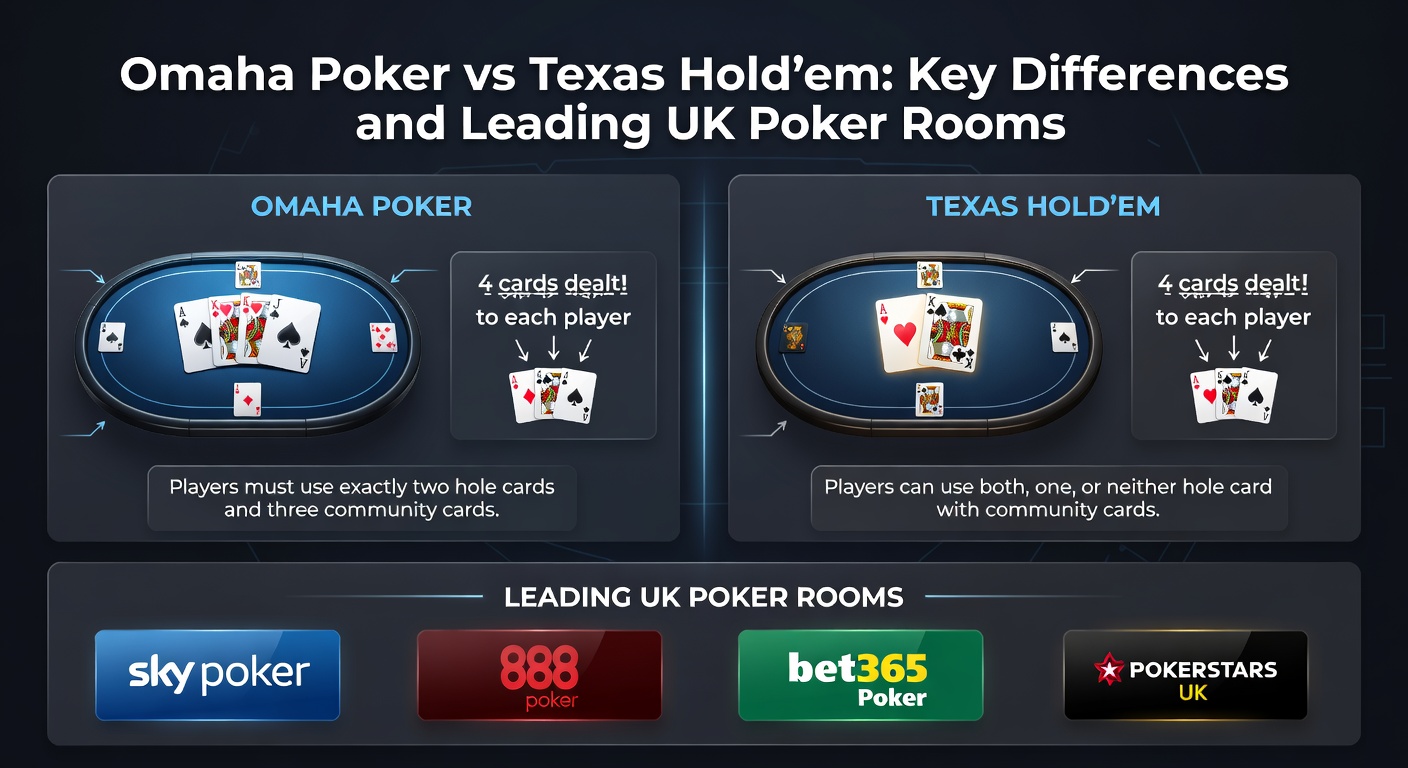
Texas Hold'em stands as the most popular poker variant worldwide, where players receive two private hole cards and share five community cards to form the best five-card hand; data from the World Poker Tour reveals that tournaments featuring this game draw millions in entries annually, especially since its explosion during the 2003 World Series of Poker. Players act in rounds of pre-flop, flop, turn, and river, betting no-limit or pot-limit structures depending on the stakes, while strategies revolve around position, bluffing, and reading opponents' tendencies because strong hands like pocket aces win about 85% of the time heads-up pre-flop, according to probability charts published by poker analysts.
But here's the thing: although beginners often start here since the rules feel straightforward, experts note that mastering ranges and equity calculations takes years, with software tools like Equilab confirming that top pairs hold up roughly 80% against random hands on the flop. Tournaments in April 2026, such as those at the European Poker Tour stops, continue to showcase Hold'em dominance, pulling in fields of over 5,000 entrants per event as figures from recent series indicate.
Omaha Poker Essentials: Four Cards Change Everything
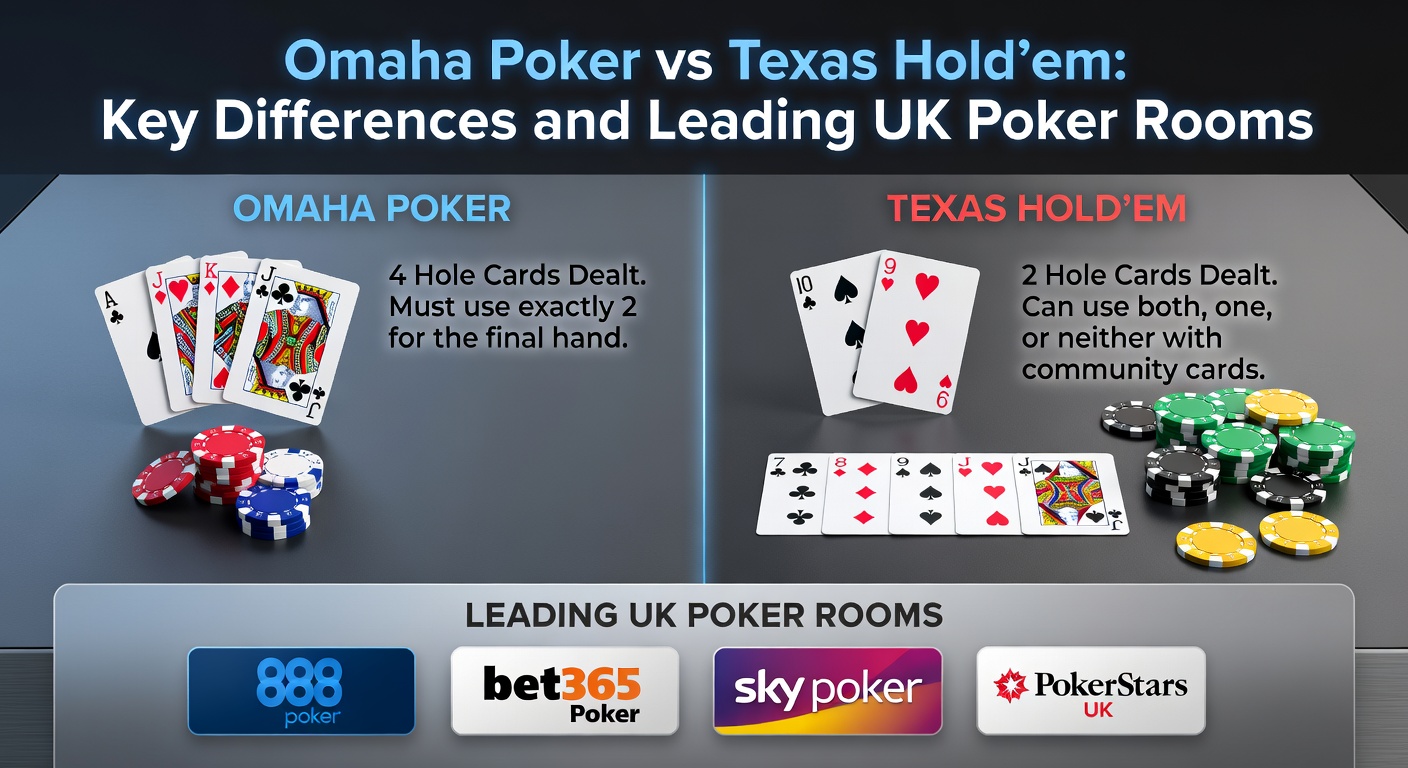
Omaha, particularly Pot-Limit Omaha (PLO), flips the script by dealing players four hole cards instead of two, requiring them to use exactly two from their hand alongside three from the five community cards; this setup, as researchers at the University of Nottingham detailed in a 2022 study on poker variants, boosts the average hand strength dramatically, making nut draws far more common and reducing bluff frequency compared to Hold'em. Betting sticks to pot-limit, where raises cap at the size of the pot, fostering bigger pots that average 20-30% higher than in no-limit Hold'em cash games, per tracking data from high-stakes trackers.
What's interesting is how Omaha Hi-Lo (O8), a split-pot version, adds a low-hand qualifier—eight or better using different cards—splitting pots between high and low qualifiers when both qualify, which data from online platforms shows leads to more conservative play early on since players chase scoops, winning the entire pot with the nuts on both ends. Observers point out that in April 2026 mixed-game festivals, like those hosted by major online networks, Omaha variants see rising participation, with entry numbers up 15% year-over-year according to industry reports.
Core Differences: Hands, Action, and Strategy Shifts
Key distinctions emerge right from the deal: Hold'em's two-card choice allows wider ranging and more bluffs because players can play any two cards profitably in short-handed spots, whereas Omaha demands precise coordination since using exactly two hole cards punishes uncoordinated holdings; studies from poker equity calculators reveal that the average winning hand in Omaha needs straights or flushes over one-pair setups that dominate Hold'em showdowns about 70% of the time. And while Hold'em thrives on position steals and light three-bets, Omaha's pot-limit structure and nut-heavy draws mean aggressive play post-flop, with pot odds dictating calls that experts calculate using tools showing implied odds exceeding 3:1 routinely.
Take nut advantage, for instance: in Hold'em, top pair top kicker suffices often, but Omaha players chase the absolute nuts because second nuts lose half the time to better draws, as case studies from high-stakes sessions demonstrate; figures from the Hendon Mob database highlight how PLO specialists like Phil Galfond rack up millions more in earnings than Hold'em-only grinders over similar volumes. Position matters less in Omaha too, since boards connect more frequently, leading to multi-way pots that Hold'em avoids through selective aggression.
Yet strategy adapts: Hold'em players fold more pre-flop, averaging 20% VPIP (voluntarily put in pot), while Omaha sees 35-40% because four cards yield playable combos; this shift, researchers discovered through hand history analysis, favors multi-tabling pros who exploit softer fields in Omaha games. It's noteworthy that volatility spikes in Omaha Hi-Lo, where low-only pots swing wildly, contrasting Hold'em's steady climb via antes and blinds.
Betting Structures and Pot Dynamics Side-by-Side
Hold'em's no-limit freedom lets players shove stacks anytime, creating all-in climaxes that define TV finals, but Omaha enforces pot-limit raises—bet the pot, then raise to the new pot—capping aggression while building monsters; data indicates average pots in PLO hit 100 big blinds faster, since calls come easier with wrap draws offering 50%+ equity against top pairs. Semicolons link these mechanics: players in Hold'em isolate with shoves, whereas Omaha grinders pot-raise rivers for value, knowing thin value bets polarize ranges effectively.
Hi-Lo adds complexity, as low scoops demand A-2 blockers, absent in standard Omaha, which explains why mixed games rotate variants to test adaptability; one study from an Australian poker research group found that versatile players win 1.5 big blinds per 100 hands more across formats. Turns out, bankroll needs balloon in Omaha—20-30 buy-ins versus 100 in Hold'em—because swings hit harder amid frequent draws.
Top UK Poker Rooms for Omaha and Hold'em Action
PokerStars leads the pack for UK players, offering robust Omaha traffic with PLO tables from micro to high stakes and Hi-Lo MTTs drawing thousands weekly; their software, praised in user logs for smooth multi-tabling, hosts April 2026 series like the Spring Championship of Online Poker, projecting £20 million guarantees based on prior events. Partypoker follows closely, emphasizing fast-fold Omaha variants that speed up action by 40%, while their SPINS jackpots hit Omaha formats, with data showing average returns near 100% rakeback for volume players.
888poker shines for recreational crowds, featuring beginner-friendly Omaha freerolls and cash games licensed under Gibraltar regulations, where traffic peaks evenings with 500+ PLO tables; observers note their promotional overlays boost value, as seen in recent leaderboards awarding £50k packages. GGPoker rounds out leaders, introducing Omaha Rush for hyper-turbo play and battling bots via advanced security, with UK-specific satellites to live events like the Grand Series feeding into 2026 schedules.
Unibet caters to casuals with soft fields, running Omaha-specific promos that data from traffic trackers confirm yield higher win rates for regs; their app integrates seamlessly for mobile, capturing the on-the-go crowd. And 777poker, though smaller, packs loyalty perks like cashback up to 40%, ideal for grinding both variants without high rakes eating edges.
These sites, all accessible to UK players via desktop or app, maintain low rakes—typically 5% capped at £3—and host diverse stakes, from £0.01/£0.02 to £5/£10, ensuring options for all; April 2026 updates include enhanced HUD compatibility across platforms, per recent patch notes.
Transitioning Between Games: What Players Experience
Those switching from Hold'em to Omaha often discover bigger swings initially, since four-card combos lead to cooler rivers, but adaptation comes quick with equity training; one case from a Danish poker academy showed converts boosting win rates 25 bb/100 after 50k hands. Position plays differently too—late spots crush in Hold'em for steals, yet Omaha rewards solid ranges everywhere because boards favor callers.
Experts who've studied hybrids advise starting PLO8 for split-pot practice, building low-hand awareness that transfers; it's not rocket science, but the writing's on the wall: Omaha fields soften online, where Hold'em sharks dominate TV but falter live against nut peddlers.
Wrapping Up: Why Both Variants Thrive in UK Poker Scenes
Omaha and Texas Hold'em each carve niches, with Hold'em suiting bluff-heavy styles and Omaha rewarding draw chasers in pot-driven battles; UK rooms like PokerStars and partypoker bridge them seamlessly, offering traffic and tourneys that keep action hot into April 2026 and beyond. Data underscores the appeal—global PLO prize pools rival Hold'em's at £500 million yearly—while players mixing formats edge out specialists long-term, as tracking sites confirm through massive databases. So whether chasing nuts or top pairs, these platforms deliver the goods, evolving with tech and trends to sustain vibrant communities.