Roulette Variant Popularity Varies Widely Across European Online Platforms
Written by Zoe Müller · Jun 10, 2026
Roulette Variant Popularity Varies Widely Across European Online Platforms
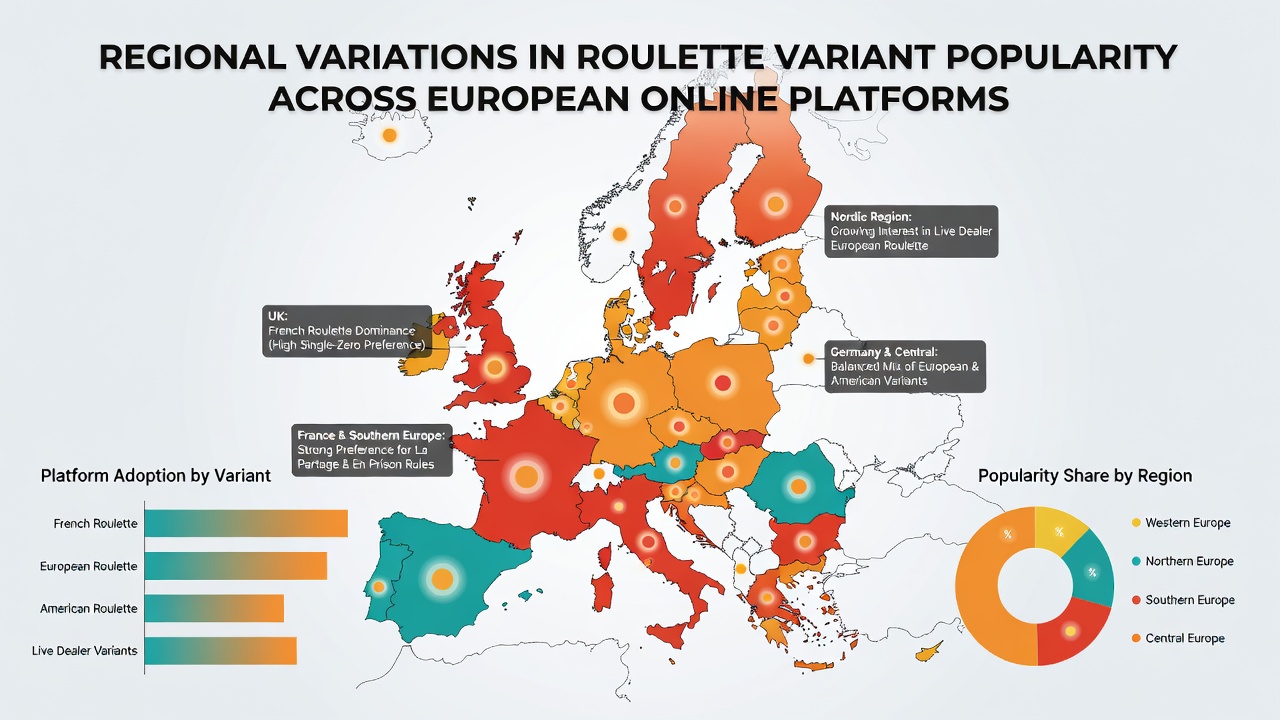
European online platforms display clear differences in which roulette variants attract the most players, and these patterns trace back to local traditions, regulatory environments, and historical exposure to specific game rules. Observers note that European roulette with its single zero remains the baseline choice in many markets, yet French roulette featuring la partage and en prison rules gains stronger traction where players seek lower house edges, while American roulette with double zeros stays marginal except in targeted promotions.
Western European Patterns
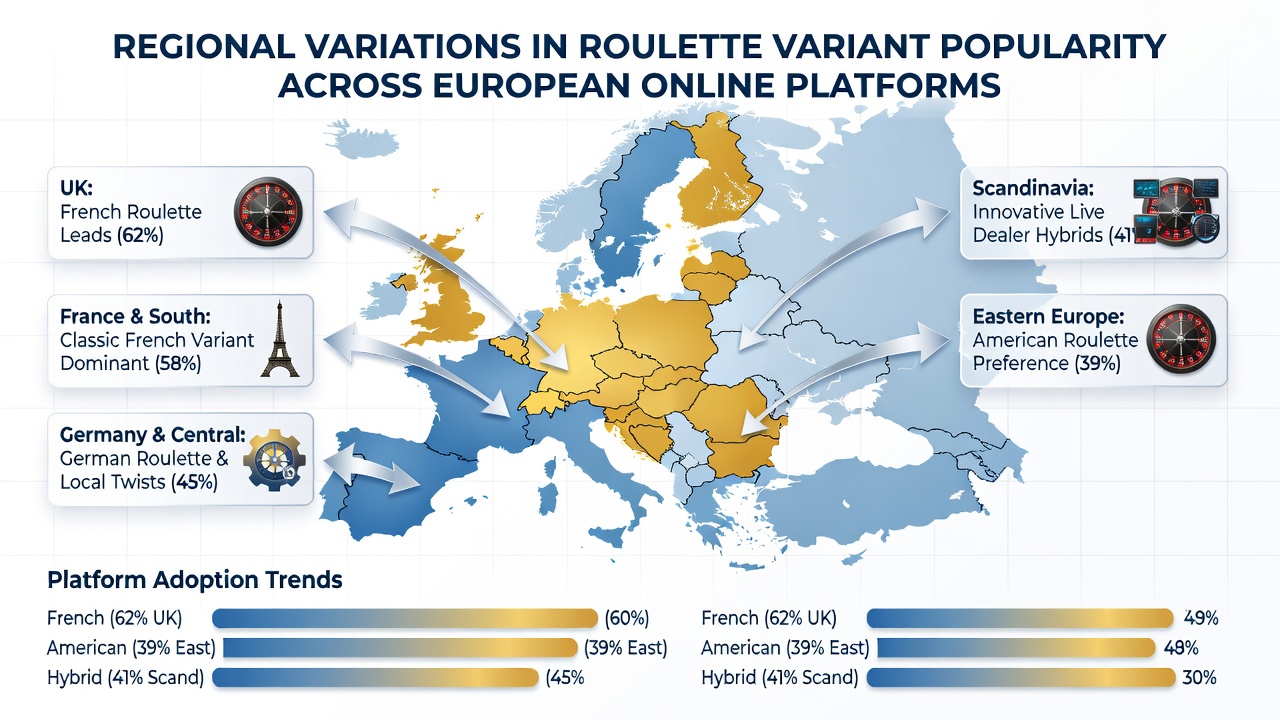
Data from industry sources shows French roulette leading in France and Belgium because platforms integrate the la partage rule that returns half the stake on even-money bets when zero appears, and this mechanic aligns with long-standing land-based casino practices in those countries. Players in the Netherlands and Germany meanwhile lean toward standard European roulette, although some operators introduce hybrid tables that blend French elements during peak evening hours. A June 2026 report compiled by the European Gaming and Betting Association highlights how these preferences hold steady year over year, with French variants accounting for over forty percent of roulette sessions in western markets compared to roughly twenty-five percent elsewhere on the continent.
Northern and Southern Contrasts
Platforms serving Scandinavia register high engagement with European roulette, yet Swedish and Finnish operators often add speed variants that reduce spin times to under thirty seconds to match faster-paced local gaming habits. In contrast, southern markets such as Spain and Italy show elevated interest in live dealer French roulette streamed from studios that replicate classic casino atmospheres, and this preference stems from cultural familiarity with Mediterranean gaming venues. Research compiled by the Malta Gaming Authority indicates that Italian players complete nearly sixty percent of their roulette activity on French-style tables, while Spanish users split more evenly between European and French options depending on promotional bonuses attached to each variant.
Central and Eastern European Developments
Central European countries including Poland and the Czech Republic register steady growth in European roulette traffic, although several platforms there experiment with American roulette during tournament events to attract visitors familiar with double-zero layouts from international travel. Eastern markets such as Romania and Bulgaria demonstrate stronger uptake of French roulette once operators introduce localized interfaces that display the la partage rule in native languages, and figures reveal session lengths extending by fifteen percent on those tables. University-led studies from institutions in the region further document how regulatory caps on maximum bets influence variant selection, with players gravitating toward French rules when stake limits encourage risk-managed play over multiple spins.
Platform Adaptations and Emerging Trends
Online operators respond to these regional signals by curating default game lobbies that prioritize the locally favored variant while keeping others accessible through search filters or category tabs. Mobile traffic data collected in early 2026 demonstrates that users in western countries spend longer periods on French roulette sessions, whereas northern players favor quick European tables that fit shorter play windows. Cross-border play remains limited by licensing rules, yet aggregated analytics show consistent migration patterns when promotions highlight rule differences, and this movement reinforces the distinct popularity clusters already observed across national boundaries.
Conclusion
Regional roulette preferences across European online platforms continue to reflect a combination of historical rules, regulatory frameworks, and player exposure to specific mechanics. Western markets maintain French roulette leadership tied to la partage benefits, northern regions emphasize streamlined European play, and southern and eastern areas balance both options with occasional American variants in promotional contexts. Industry reports released through June 2026 confirm these divides persist even as platforms refine interfaces and live dealer offerings, and the resulting landscape underscores how geography shapes digital gambling behavior without requiring uniform approaches from operators.