Tracing Connections: Roulette Variants and Affiliate Networks in Europe's Regulated Markets
Written by Tina Schmitz · May 22, 2026

Tracing Connections: Roulette Variants and Affiliate Networks in Europe's Regulated Markets
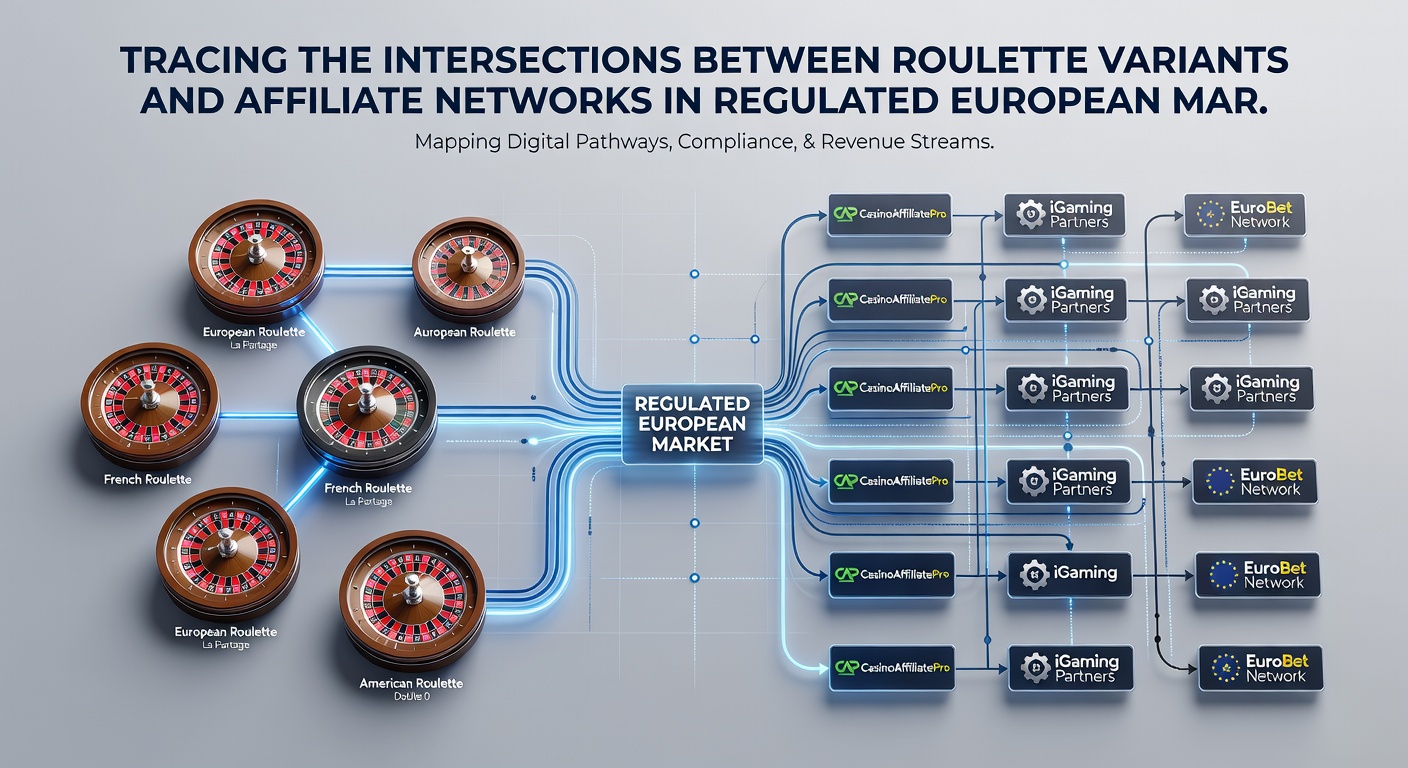
European gambling markets have developed distinct frameworks where roulette variants intersect with affiliate networks through licensing requirements, player acquisition models, and compliance standards that differ across member states. Regulated operators in countries such as Sweden, the Netherlands, and Germany must align roulette offerings with local rules while affiliates navigate revenue share agreements that depend on those same restrictions.
European roulette features a single zero and a 2.7 percent house edge, whereas French roulette adds rules like en prison and la partage that further reduce the edge to 1.35 percent on even-money bets. American roulette introduces a double zero and raises the house edge to 5.26 percent. Online platforms operating under European licenses often promote these variants through affiliate channels that target specific jurisdictions, with data from industry reports showing that European roulette accounts for the majority of tracked roulette traffic in controlled markets.
Affiliate Structures and Roulette Promotion
Affiliate networks operate on models that include cost-per-acquisition payments and revenue sharing percentages, both of which tie directly to the roulette games an operator offers. In markets where regulators require game certification, affiliates must verify that promoted variants carry valid approvals before directing traffic, which creates documented workflows between network operators and compliance teams. Research from the European Gaming and Betting Association indicates that affiliates handling roulette traffic achieve higher conversion rates when campaigns specify French or European roulette rather than American variants, because players respond to lower house edges listed in promotional materials.
Those who manage affiliate programs note that cookie duration periods and player lifetime value calculations shift according to teh regulatory environment. Shorter cookie windows in stricter jurisdictions reduce the window during which an affiliate earns from roulette deposits, prompting networks to adjust commission tiers accordingly.
Regulatory Variations Across European Jurisdictions
Germany's State Treaty on Gambling imposes strict advertising limits that affect how affiliates describe roulette variants, requiring clear disclosure of house edges and prohibiting certain bonus combinations. The Netherlands Kansspelautoriteit enforces similar transparency rules, while Sweden's Spelinspektionen monitors affiliate content for responsible gambling messaging. These differences mean that a single roulette title may appear with distinct marketing angles depending on the target market, and affiliate networks maintain separate landing pages to satisfy each authority.
Observers tracking compliance data have recorded that operators licensed in multiple jurisdictions often segment their affiliate campaigns by roulette type, routing French roulette traffic toward markets that favor slower-paced table games and directing faster variants toward audiences that prefer automated versions. This segmentation appears in traffic reports compiled by affiliate software providers.
Emerging Trends and Data Patterns
Live dealer roulette streams have gained traction in regulated European environments because they combine the visual appeal of physical wheels with digital tracking that affiliates can monitor. Statistics published in 2025 industry analyses show live European roulette generating 18 percent higher retention rates than random-number-generator versions in the Netherlands and Sweden. Affiliates incorporate these figures into performance reports that help operators refine commission structures.
Plans for further harmonization of cross-border advertising rules are scheduled to take effect in May 2026 under updates discussed by EU working groups. These changes would require affiliates to include standardized risk warnings across all roulette promotions, regardless of the specific variant. Networks that already operate in multiple countries have begun testing unified disclosure templates to prepare for the transition.
Academic studies from research institutions in Northern Europe have examined how affiliate-driven traffic influences player behavior across roulette variants. One paper found that players acquired through revenue-share affiliates tend to favor French roulette when bonus terms highlight the la partage rule, while cost-per-acquisition traffic shows less preference differentiation. Such findings help regulators and networks alike assess the impact of promotional language.
Case Examples from Market Participants
Take one network that expanded operations into the German market after the 2021 State Treaty. The operator adjusted its roulette portfolio to exclude American variants and rerouted affiliate creatives to emphasize certified European wheels. Conversion data collected over the following two years indicated steady growth in qualified sign-ups, consistent with patterns reported by other networks operating under comparable licenses.
There's this case where experts at a Maltese-licensed operator tracked affiliate performance across Swedish and Dutch channels. French roulette campaigns outperformed others in both markets when paired with educational content on house-edge calculations, demonstrating how variant choice and affiliate messaging interact under regulatory scrutiny.
Conclusion
The intersections between roulette variants and affiliate networks in regulated European markets rest on licensing conditions, house-edge transparency, and jurisdiction-specific advertising rules. Data from multiple regulatory bodies and industry associations continue to illustrate how these elements shape traffic flows and commission structures. As implementation of updated EU guidelines approaches in May 2026, networks and operators maintain ongoing adjustments to align roulette promotions with evolving compliance requirements while preserving measurable performance across markets.